
Ancient Bread Rises Again as Türkiye Recreates 5,000-year-old Loaf 

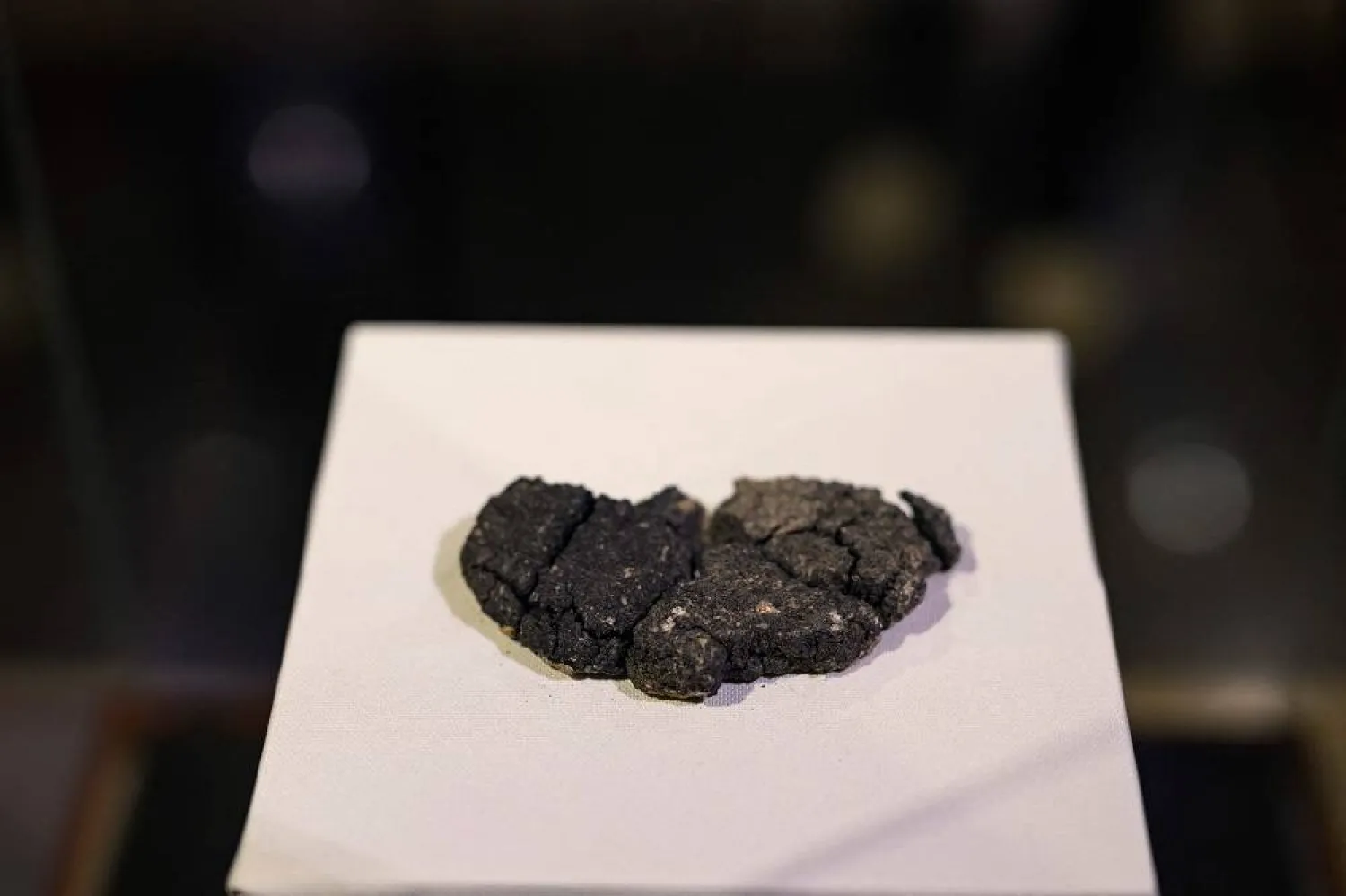
This photograph shows Kulluoba bread, a 5,000-year-old bread unearthed in an archeological excavation in Eskisehir province, in central Türkiye, exhibited at Eskisehir ETI archeology museum, on May 23, 2025. (AFP)
TT

Ancient Bread Rises Again as Türkiye Recreates 5,000-year-old Loaf 

This photograph shows Kulluoba bread, a 5,000-year-old bread unearthed in an archeological excavation in Eskisehir province, in central Türkiye, exhibited at Eskisehir ETI archeology museum, on May 23, 2025. (AFP)

In the early Bronze Age, a piece of bread was buried beneath the threshold of a newly built house in what is today central Türkiye.

Now, more than 5,000 years later, archaeologists have unearthed it, and helped a local bakery to recreate the recipe with customers lining up to buy it.

Round and flat like a pancake, 12 centimeters (five inches) in diameter, the bread was discovered during excavations at Kulluoba, a site near the central Anatolian city of Eskisehir.

"This is the oldest baked bread to have come to light during an excavation, and it has largely been able to preserve its shape," said Murat Turkteki, archaeologist and director of the excavation.

"Bread is a rare find during an excavation. Usually, you only find crumbs," he told AFP.

"But here, it was preserved because it had been burnt and buried," he said.

The bread was charred and buried under the entrance of a dwelling built around 3,300 BC.

A piece had been torn off before the bread was burnt, then buried when the house was built.

"It makes us think of a ritual of abundance," Turkteki said.

Unearthed in September 2024, the charred bread has been on display at the Eskisehir Archaeological Museum since Wednesday.

"We were very moved by this discovery. Talking to our excavation director, I wondered if we could reproduce this bread," said the city's mayor, Ayse Unluce.

Analyses showed that the bread was made with coarsely ground emmer flour, an ancient variety of wheat, and lentil seeds, with the leaf of an as yet undetermined plant used as yeast.

Ancient emmer seeds no longer exist in Türkiye.

To get as close as possible to the original recipe, the municipality, after analyzing the ancient bread, decided to use Kavilca wheat, a variety that is close to ancient emmer, as well as bulgur and lentils.

At the Halk Ekmek bakery (meaning "People's Bread" in Turkish), promoted by the municipality to offer low-cost bread, employees have been shaping 300 loaves of Kulluoba by hand every day.

"The combination of ancestral wheat flour, lentils and bulgur results in a rich, satiating, low-gluten, preservative-free bread," said Serap Guler, the bakery's manager.

The first Kulluoba loaves, marketed as 300-gram (11-ounce) cakes that cost 50 Turkish lira (around $1.28), sold out within hours.

"I rushed because I was afraid there wouldn't be any left. I'm curious about the taste of this ancient bread," said customer Suzan Kuru.

In the absence of written traces, the civilization of Kulluoba remains largely mysterious.

In the Bronze Age, the Hattians, an Anatolian people who preceded the Hittites, lived in the Eskisehir region.

"Kulluoba was a medium-sized urban agglomeration engaged in commercial activities, crafts, agriculture and mining. There was clearly a certain family and social order," said archaeologist Deniz Sari.

The rediscovery of the bread has sparked interest in the cultivation of ancient wheats better adapted to drought.

Once rich in water sources, the province of Eskisehir is today suffering from drought.

"We're facing a climate crisis, but we're still growing corn and sunflowers, which require a lot of water," said Unluce, the local mayor.

"Our ancestors are teaching us a lesson. Like them, we should be moving towards less thirsty crops," she added.

The mayor wants to revive the cultivation of Kavilca wheat in the region, which is resistant to drought and disease.

"We need strong policies on this subject. Cultivating ancient wheat will be a symbolic step in this direction," she said.

"These lands have preserved this bread for 5,000 years and given us this gift. We have a duty to protect this heritage and pass it on."

Louvre Staff Vote for Strike Again

This photograph shows a general view of the Louvre Museum, with the Louvre pyramid (L) designed by Chinese-US architect Ieoh Ming Pei, after the first snowfall of the year in Paris on January 3, 2026. (Photo by Blanca CRUZ / AFP)
TT

Louvre Staff Vote for Strike Again

This photograph shows a general view of the Louvre Museum, with the Louvre pyramid (L) designed by Chinese-US architect Ieoh Ming Pei, after the first snowfall of the year in Paris on January 3, 2026. (Photo by Blanca CRUZ / AFP)

Staff at the Louvre voted for another day of strike action on Monday, union representatives told AFP in Paris, threatening fresh disruption at the world's most-visited museum.

Disgruntled staff stopped work for three days last month, causing a complete shutdown on one day and partial closures on two others.

More than two months after an embarrassing daylight heist at the museum, which has heaped pressure on management, staff are calling for more recruitment and better maintenance of the vast complex of buildings.

"Around 350 people from various professions -- operations, conservation, support staff -- voted unanimously" to resume strike action, Valerie Baud from the CFDT union told AFP.

The CGT union confirmed the vote on its Instagram account.

It was unclear whether the strikers would force management to close or limit access to visitors on Monday.

The Louvre workforce totals over 2,000 people.

Questions continue to swirl since the October 19 break-in at the Louvre over whether it was avoidable and why thieves were able to steal crown jewels worth more than $100 million.

Two intruders used a truck-mounted extendable platform to access a gallery containing the jewels, slicing through a glass door with disk-cutters in front of startled visitors before stealing eight priceless items.

As well as the robbery, two other recent incidents have highlighted maintenance problems inside the building which chief architect Francois Chatillon has described as "not in a good state.”

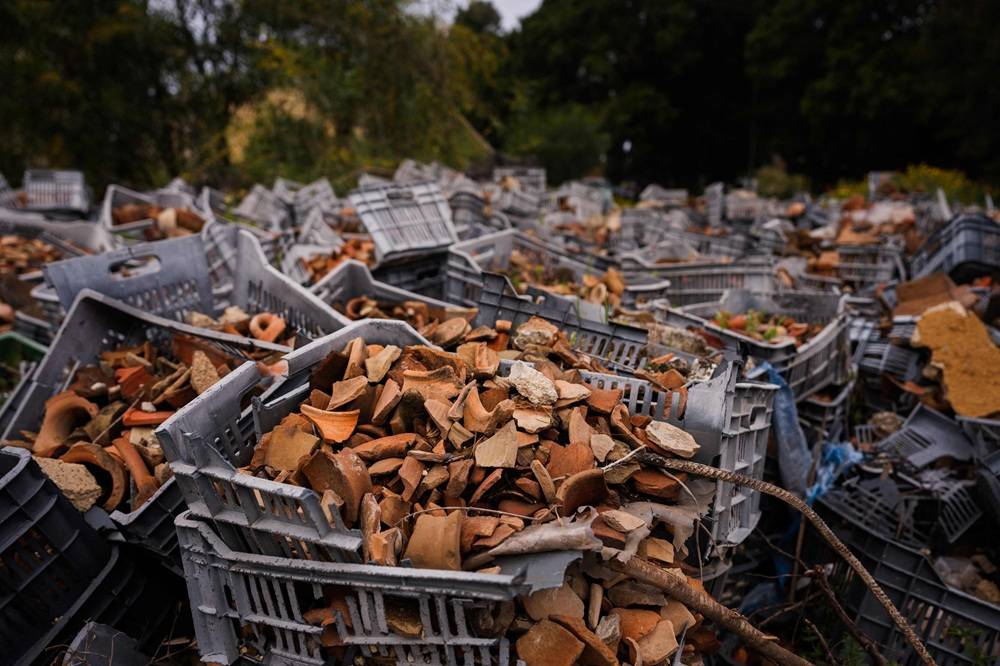
A water leak in November damaged hundreds of books and manuscripts in the Egyptian department, while management had to shut a gallery housing ancient Greek ceramics in October because ceiling beams above it risk giving way.


Jazan Festival Takes Visitors on a Journey Through Culture and Heritage

"This is Jazan” zone, part of Jazan Festival 2026, has opened to visitors offering an engaging tourism experience. (SPA)
TT

Jazan Festival Takes Visitors on a Journey Through Culture and Heritage

"This is Jazan” zone, part of Jazan Festival 2026, has opened to visitors offering an engaging tourism experience. (SPA)

The “This is Jazan” zone, part of Jazan Festival 2026, has opened to visitors, offering an engaging tourism experience that highlights the region’s history, culture, and modern life. The zone showcases how Jazan’s diverse landscapes—coasts, mountains, and plains—have shaped its unique lifestyle and rich cultural identity, the Saudi Press Agency said on Sunday.

All 16 governorates of the region are represented, giving visitors the opportunity to explore Jazan’s heritage through traditional crafts, folk arts, and live performances. Displays include heritage tools, handicrafts, local products such as honey and ghee, traditional attire, and authentic cuisine, reflecting the diversity and authenticity of each governorate.

Running until February 15, Jazan Festival features a wide range of cultural, entertainment, and folk events across Jizan city and the region's governorates, alongside ongoing activities at tourist sites, parks, and beaches, reinforcing Jazan’s status as a vibrant and well-rounded tourist destination.


Al-Eishan Palace Welcomes Visitors in Saudi Arabia's Sakaka

The palace offers visitors an authentic culinary and cultural experience - SPA
TT

Al-Eishan Palace Welcomes Visitors in Saudi Arabia's Sakaka

The palace offers visitors an authentic culinary and cultural experience - SPA

Visitors to Al-Jouf Region can explore a wealth of historical landmarks and distinctive architectural heritage, with mud-brick palaces offering immersive cultural experiences blending traditional cuisine with local hospitality.

Among these highlights is Al-Eishan Palace, where guests are greeted with Saudi coffee and freshly prepared Maqshush bread, a thin flatbread known for its unique flavor, SPA reported.

Located in the heart of Sakaka, Al-Eishan Palace dates back to 1268 AH. It served as a residence adjacent to a mosque and is surrounded by lush palm groves. Built from mud, stone, tamarisk wood, and palm fronds, the palace spans more than 1,000 square meters, with walls rising over five meters high. To the east, it is bordered by palm trees and fruit-bearing orchards, including peaches, pomegranates, and grapes.

The palace offers visitors an authentic culinary and cultural experience, beginning with a traditional breakfast of hand-baked Maqshush bread and Saudi coffee. Its facilities retain their original architectural character, including the majlis, the inner courtyard, and the small rooms that once served as living quarters for the palace’s residents.

These areas have been carefully restored and are now open to visitors throughout the day. Parts of the palace were redeveloped in 1439 AH while preserving the original foundations and building materials.